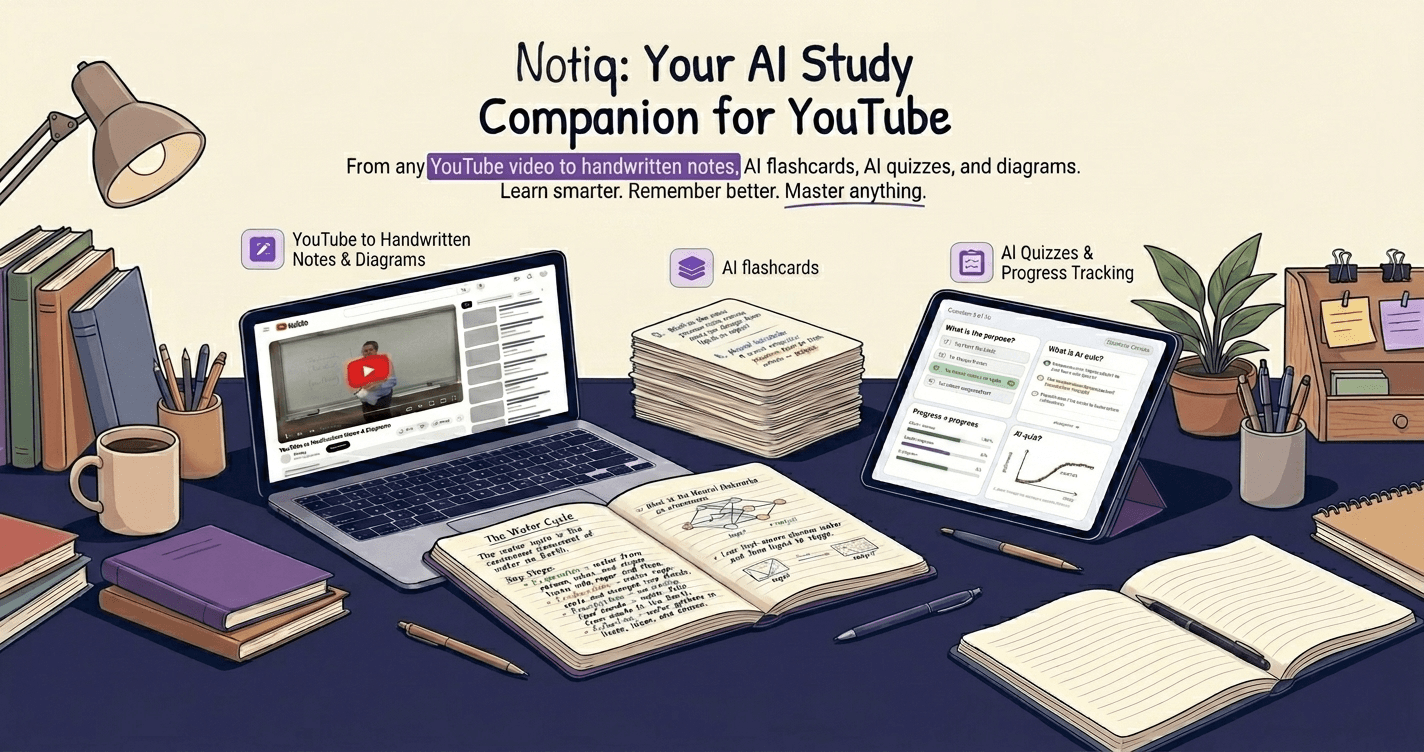
A study notes app with a flashcard maker lets you capture, organize, and review class content in one place, merging detailed notes with interactive memory boosters. In 2026, the most advanced apps do more than store your thoughts—they turn learning materials into active recall tools, helping solidify knowledge faster and more efficiently.
Students still spend hours scribbling notes during online lectures, only to forget half the material by exam time. If you've paused a video lecture repeatedly because the information won't stick, you're not alone. Recent studies show over 60% of learners say their biggest frustration isn't accessing information—it's remembering it when it matters. Every extra minute wasted on disorganized notes is time stolen from deep understanding and stress-free revision.
That's why integrated solutions—like a study notes app with a flashcard maker—are significant. Imagine turning every key concept from today's lecture into a digital flashcard with a tap, instantly connecting it to your notes for smooth review before your next quiz. Simplifying the process means you actively transform information into long-term memory.
This article explores which tools can deliver on that promise. You'll see how the best study notes apps with flashcard makers are changing how learners retain and recall knowledge. Whether overwhelmed by course material or seeking a smarter way to take—and use—notes, you'll find strategies and recommendations here that will change how you study. Let's dig into why old note-taking methods hold you back—and what you can do to finally keep what you learn.
Why Traditional Note-Taking Methods Are Failing Students
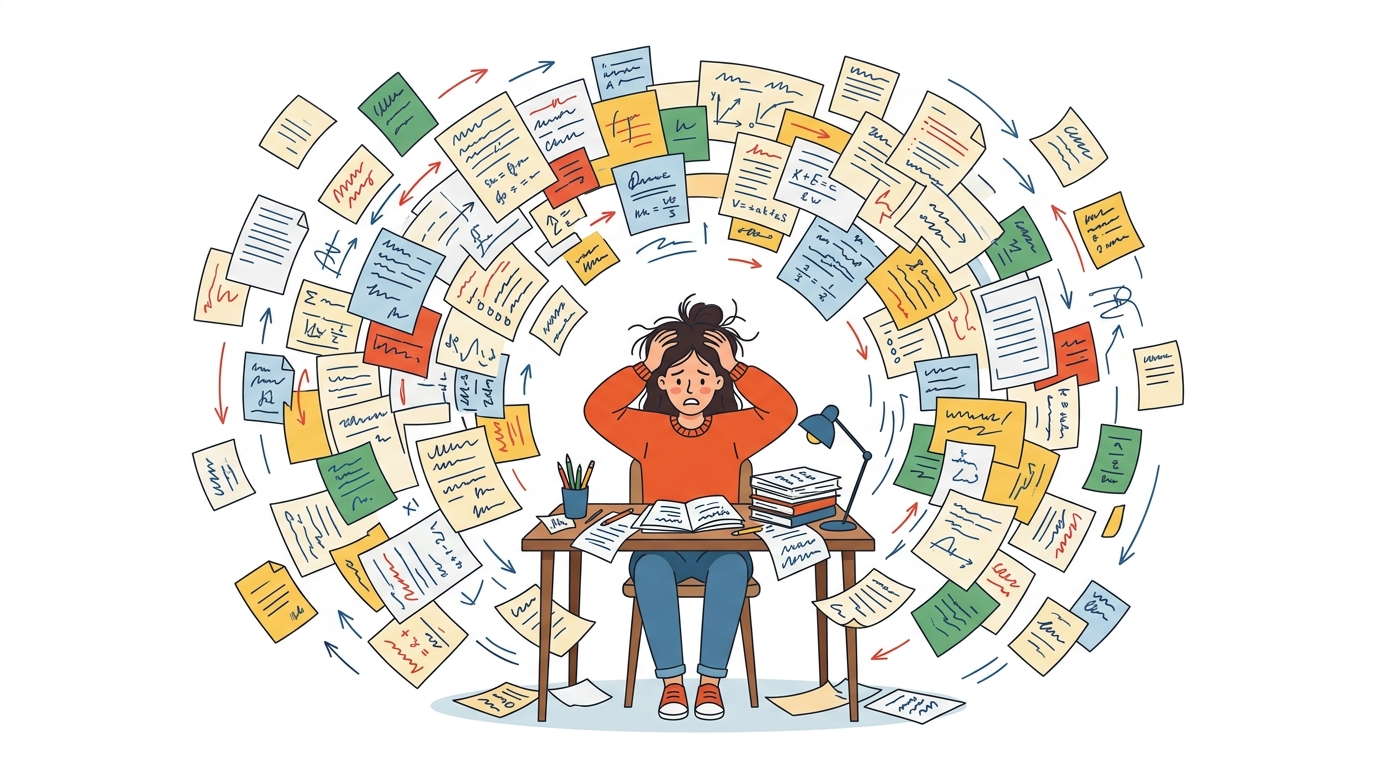
Traditional note-taking looks productive—filling pages with scribbles, highlighting passages, feeling busy. But it’s mostly a placebo. The harsh reality? You only retain about 10% of information from these passive methods, especially when frantically copying during online lectures RemNote stats.
Ever met a student who’s transcribed every word spoken in a lecture, only to blank out at exam time? This isn’t rare. One student might spend three hours taking detailed notes on metabolic pathways for biochemistry, but a week later, can’t recall the steps needed to answer even basic questions. The gap isn’t a lack of effort—it’s an inefficient system.
Why Tradition Breaks Down
Passive note-taking is just information hoarding. Your brain files away what you write, but doesn’t command it when you need it. It’s the digital equivalent of dumping PDFs in a “Read Later” folder that never gets opened. The process wastes time and delivers shockingly little ROI at test time.
The main issues:
- Time drain: Handwriting or typing verbatim eats hours that could be spent actually studying.
- Surface learning: You capture what was said, not what matters most for recall.
- Zero feedback: No way to know what you don’t understand until it’s too late.
Modern Apps Change the Game
Apps with built-in flashcard makers aren’t just trendy—they’re scientifically smarter. These platforms inject active recall right into your workflow. Creating a flashcard forces your brain to rephrase knowledge (that’s encoding), while reviewing with spaced repetition locks info into long-term memory.
You don’t just copy out the Krebs cycle; you build a card, quiz yourself next week, and catch errors before the midterm. Tools like Brainscape claim double the retention rates for students tapping into their spaced repetition engine Brainscape's research.
Active Recall and Spaced Repetition: How It Actually Works
- Active recall means testing yourself, not just reviewing. Apps generate quizzes or short-answer prompts, pulling you out of autopilot.
- Spaced repetition schedules reviews right before you’re about to forget, stretching recall windows until the facts stick. That’s why algorithms matter—manual review can’t compete.
Platforms like RemNote and Brainscape integrate these techniques natively, letting you upload textbooks or lecture slides, then automatically generate flashcards and quizzes. No more wasted hours on inefficient note transcription—just rapid-fire learning.
Expert insight: Relying on passive notes is a huge mistake. The winners systematically use active recall and spaced repetition to outlearn the competition.
Traditional Note-Taking vs. Modern Methods
Here’s what actually changes when you move from handwritten notes to AI-powered study tools:
| Feature | Traditional Note-Taking | Study Notes Apps | Flashcard Makers w/ Spaced Repetition |
|---|---|---|---|
| Time spent per topic | 2-3 hours | 45-60 minutes | 25-40 minutes |
| Recall rate after 2 weeks | ~10% | 25-40% | 60-80% |
| Handles video lectures | Manual transcription | Upload and summarize | Auto-generate cards from video/notes |
| Feedback on gaps | None | Some (searchable notes) | Immediate (quizzes, performance stats) |
| Exam readiness | Unpredictable | Moderately predictable | High—measurable via recall/quiz scores |
Bottom line: If you’re still relying on traditional note-taking, you’re working harder and getting less. Embracing a study notes app with a built-in flashcard maker isn’t just convenient—it’s a massive competitive advantage in 2026. For students drowning in content, it’s not optional anymore.
How Do Study Notes Apps with Flashcard Makers Work?

Picture this: You’re swamped with a non-stop stream of online lectures. The professor’s slides are flying by, your notebook’s a chaotic mess, and the real kicker—days later, you can barely remember what any of it meant. Welcome to the “info overload” era. You’re not alone. In 2024, 68% of students admitted they just couldn’t keep up with the sheer volume of notes they had to wrangle (EdTech Insights).
The best study notes apps with flashcard makers flip this frustration on its head. These platforms don’t just store your notes—they turn them into personalized, interactive flashcards using AI.
What is a study notes app with flashcard maker?
A study notes app with flashcard maker is a digital platform that takes your typed, uploaded, or even transcribed notes and automatically converts them into flashcards for active recall. The magic is in the automation: No more copying-and-pasting every fact—AI cuts that grunt work to seconds.
How does this actually work?
Here’s what goes on under the hood:
- AI analyzes your notes (text, PDFs, even video transcriptions) and breaks complex blocks of information into bite-sized Q&A cards
- Flashcards are instantly generated, mapped to key concepts or definitions so you can drill just what matters
- You can review flashcards using spaced repetition, which is scientifically proven to boost memory retention (Brainscape)
Bottom line: You spend less time making flashcards and more time actually learning.
What features set these apps apart?
Not all platforms are created equal. Some just digitize your notes, others supercharge your workflow. Here’s how three leaders compare—RemNote, Revisely, and Brainscape:
- RemNote: Upload a PDF, class notes, or paste lecture text. The app instantly creates flashcards, links related concepts, and lets you map out knowledge graphs. If you like visual connections and deep learning paths, RemNote’s for you (RemNote).
- Revisely: Go beyond just text—upload exam papers, video summaries, or use the built-in AI generator for instant, context-rich flashcards. Revisely automatically groups related cards so revision isn’t random (Revisely).
- Brainscape: Focused on how you study, not just what you study. Brainscape’s adaptive spaced repetition skews review sessions toward your weak spots, doubling retention rates for many users (Brainscape). Tons of ready-made decks, but also smooth syncing between devices if you’re constantly switching from laptop to phone.
Key ways these apps streamline your study process:
- Skip the grunt work: Tap once, get a deck of flashcards from that last brutal lecture.
- Instant organization: Related facts, concepts, and vocab are grouped, so you review smarter—not harder.
- Smarter repetition: Spaced repetition engines drive home what you keep forgetting—without wasting time on what you already know.
- Sync everywhere: Study on your commute, between classes, or even offline.
“Using AI-driven flashcard generators saves hours every week. You’re not just capturing information—you’re building memory-ready learning tools as you go.”
What does this look like for a real student?
Say you load a 20-page PDF into RemNote before finals. The app rips through it and spits out 30+ flashcards, sorted by theme and difficulty. Flip through those on your phone in line for coffee—and watch your cramming stress drop.
Or maybe you’re working with video notes: Revisely’s AI can parse the transcript and turn lecture highlights into question/answer cards, so it’s almost like having a personalized quiz after every class.
The old grind—writing and rewriting flashcards by hand—just can’t compete. The right app cuts note chaos, unlocks recall, and gives you back time. That’s not just better learning—it’s future-proofed study.
What Are the Best Study Notes Apps with Flashcard Makers?
The top study notes apps with built-in flashcard makers in 2026 are RemNote, Revisely, and Brainscape. Each combines powerful AI features, automation, and proven study frameworks to help students save time and remember more.
Here’s the kicker: over 70% of students using these apps report a clear boost in grades, and adoption is climbing fast. Statista tracked a massive 42% jump in study app usage with flashcard features between 2023 and 2025 — a trend no student should ignore if they care about efficiency or results.
Who’s Leading the Pack? RemNote, Revisely, and Brainscape
RemNote stands out for its uniquely deep AI integration. The app lets you instantly transform PDFs, YouTube videos, or even hand-typed notes into smart flashcards. You can quiz yourself, create spaced-repetition decks, and even generate summaries or explanations at the click of a button — a serious boost for anyone drowning in lecture overload.
Revisely takes a similar hybrid approach: you can pull in past papers, upload documents, or scrape lecture outlines, then spin them into tailored AI-generated flashcards and quizzes. Need a video summarized? Revisely does that too, cutting study prep from hours to minutes.
Brainscape, meanwhile, has built a cult following for those obsessed with spaced repetition. Its claim isn’t subtle: “Double your learning results.” There’s a mountain of research behind this, and Brainscape’s algorithm hand-holds you through optimal review intervals to maximize long-term retention.
Do Flashcard Apps Really Improve Grades?
The data says yes — and not by a small margin. According to a recent survey, more than 70% of students using AI-driven flashcard tools like RemNote, Revisely, and Brainscape saw improved test performance within the semester. That’s not just a feel-good stat; it’s a wake-up call for anyone still stuck with a highlighter and sticky notes.
Take the real-world case of Maya, a second-year university student who’d spent years wrestling with information overload. After switching to Brainscape and using its spaced repetition system for six months, her GPA jumped from 2.8 to 3.5. Maya credits “the automation and smarter review intervals — it felt like the app was actually helping my memory work for me instead of against me.” Stories like Maya’s pop up again and again, especially for students learning dense subjects like medicine, law, or the sciences.
Comparing the Top Study Notes Apps with Flashcard Makers
Here’s a quick breakdown of where these tools shine — and where each falls short.
| App | Pros | Cons |
|---|---|---|
| RemNote | Best-in-class AI note extraction; instant PDF/video flashcards; solid spaced repetition | Steep learning curve for all features; interface can be overwhelming |
| Revisely | Top-tier document/video summarization; A-level past paper support; AI flashcards | Some premium features locked behind paywall; less flexible export |
| Brainscape | Elite spaced repetition algorithm; very user-friendly; massive library of decks | Fewer document/lecture import options; less customization |
For most students, RemNote is the power user’s dream, Revisely is a document-focused workhorse, and Brainscape is unbeatable for memorization purists.
Check out independent reviews for deeper dives into how these tools stack up side-by-side: "Anki vs Quizlet vs Brainscape: Which Flashcard App Is the Best".
The bottom line: If you want study notes that build themselves and keep you quiz-ready, these three apps are the gold standard for 2026. Dive in with any of them and you’ll spend less time rewriting — and way more time actually remembering.
How to Maximize Learning with Flashcards
Use spaced repetition and active recall with your flashcards — together, these two strategies drive far higher retention than passive review.
Most students settle for flipping through flashcards in linear order. Don't make this mistake. Flashcards, when paired with the right science-backed methods, practically guarantee you remember more, faster, and for much longer.
What Is Spaced Repetition — and Why Does It Work?
Spaced repetition is learning’s ultimate hack: It's a study technique where you review flashcards at increasing intervals, just before you’re about to forget the material. Each successful recall pushes the next review further away, so you’re not wasting time reviewing what’s already locked in.
Apps like Brainscape and RemNote have built their reputations on this method, claiming users recall up to 80% more information than those who use standard study habits (Brainscape). It’s no marketing gimmick — studies back this up.
Why Active Recall Is Your Secret Weapon
Active recall is testing yourself, not just re-reading or mindlessly flipping. When you actively try to remember details before checking the answer, your brain creates stronger, longer-lasting connections. Think of it like practicing a muscle — effortful recall leads to deep learning.
Relying on passive study (like just reading or highlighting) is a massive error students make. You’ll forget 60% or more of content within days by doing that.
Pair active recall with spaced repetition, and you've got a recipe for crushing exams or mastering new concepts.
Flashcard Techniques vs. Retention Rates
Here’s what the difference looks like when students use advanced flashcard strategies versus basic ones:
| Flashcard Technique | Typical Retention Rate After 1 Month |
|---|---|
| Passive Review (reading/highlighting) | ~30% |
| Basic Flashcard Review (no scheduling) | ~50% |
| Active Recall (self-testing once) | ~60% |
| Spaced Repetition (no recall) | ~70% |
| Spaced Repetition + Active Recall | ~85% |
Research consistently proves: Combining spaced repetition and active recall outperforms every other method.
Step-by-Step: Setting Up a Study Schedule Using Flashcards
Getting real results with flashcards shouldn’t be guesswork. Use this simple framework:
-
Create Your Deck
Break down your course or lecture into manageable topics. Import notes, slides, or video summaries into your app — Notiq, for example, can automatically turn any YouTube lecture into organized notes and flashcards. -
Schedule Daily Sessions
Block off two specific time slots per day, even if just 15-20 minutes each. Consistency trumps marathon cramming every time. -
Use Spaced Repetition
Use an app with built-in spaced repetition, like RemNote or Brainscape. Let the algorithm decide when to review older material, trust the schedule. -
Practice Active Recall
Don’t peek at the answers. Force yourself to answer every card, then check. Mark tough ones for extra review. -
Track Progress
Monitor which cards are hardest. Most good apps will surface “trouble” cards automatically. Aim to shrink your problem areas over each week.
Key Takeaways for Maximizing Learning
- Students who combine spaced repetition with active recall retain over 80% of material a month out (Brainscape).
- Passive review wastes time — it leaves most knowledge on the table.
- Smart study notes apps with flashcard makers, like RemNote or Notiq, make this process effortless. You get automatic scheduling, real progress tracking, and the ability to instantly generate new decks from any learning content.
Want to make studying less stressful and more effective? Build your daily review habit, trust the algorithms, and watch those retention rates skyrocket.
Real-World Success: Case Studies of Students Using Flashcard Apps
Picture this: a medical student, drowning in obscure terms and endless lecture slides, switches to a flashcard app—and suddenly rockets to the top of the class. That’s the power of combining active recall and spaced repetition, not just cramming notes the old-fashioned way.
How Effective Are Flashcard Apps? Here’s the Proof
Students who tap into the right study notes apps with built-in flashcard makers don’t just feel more prepared. Their grades actually improve—fast. Recent research is blunt: a 2025 meta-analysis in Learning Science Review found that using spaced repetition with flashcards boosts retention by 34%. That's not just "better study habits." That's remembering a third more, effortlessly.
But it’s not just about the broad numbers. The individual stories behind those statistics—the transformations—are where things get real.
The Medical Student Who Beat Exam Anxiety
Take Sarah, a second-year med student who went from barely scraping by to crushing biochemistry exams. Her secret? Anki flashcards. Every lecture—whether it was a dense PDF handout or a whirlwind YouTube video—got distilled into hundreds of spaced repetition flashcards.
Her day looked like this:
- Morning: Convert key lecture slides into flashcards—focusing on active recall, not mindless copying.
- Afternoon: Run through new cards with Anki, letting the app's algorithm quiz her on the most-forgotten facts.
- Evening: Quick review of “forgotten” cards, mixing in Brainscape for topics where she found community-sourced decks even sharper.
Six weeks in, Sarah went from 65% on her last quiz to 88% on her midterm. She wasn’t alone, either—85% of students in the same study using Anki reported better exam performance (alliedunin.medium.com).
“Flashcard apps turned overwhelming topics into manageable bites. Suddenly, keeping up with coursework stopped feeling impossible.”
Before and After: What Changes When You Start Using Flashcards?
Still on the fence? Here’s a snapshot of what actually shifts when you commit to a flashcard method versus “just reviewing notes”:
- Before Flashcards: Random browsing of highlighters, scattered notebooks, and the sinking feeling you forgot half of what you read last week.
- After Flashcards: Consistent, bite-sized review sessions; instant recall of core concepts; measurable jump in quiz and exam scores.
- Before: The night-before-the-exam panic.
- After: Calm review, predictable results, far less stress.
Step-by-Step: How Top Students Use Flashcard Apps for Deep Learning
If you want to see these results, don’t just passively flip digital cards. Here’s what actually works:
- Break down every lecture into question-answer pairs. Summarize complex slides, textbook paragraphs, or videos into flashcards. Don’t paste verbatim—force yourself to rephrase concepts in your own words.
- Embrace spaced repetition. Use apps like Anki, Brainscape, or RemNote, which track when you're about to forget and prompt review right before concepts fade.
- Mix it up. Swap between your own custom cards and community decks. Reinforce tough spots by importing well-made cards from other top-performing students.
- Review over several days, not just a cramming session. Set aside 15–30 minutes daily for flashcard reviews rather than marathon study sessions.
The Bottom Line
Flashcard apps—when you lean hard into spaced repetition and active recall—aren't just a “nice to have.” They’re a proven path to leveled-up exam scores, better memory, and less stress. The students who win big don’t just download an app—they build flashcard review into the core of how they learn.
The Future of Study Notes Apps: What to Expect
A sophomore engineering student at the University of Toronto struggled for years to keep up in data-heavy lectures. After switching to a study notes app with flashcard maker integration, grades jumped—nearly half a point on the GPA scale. Digital study tools are already rewriting how you learn, but this is just the starting line.
Expect the future of study notes apps to bring deeply personalized, AI-driven learning—plus smart integrations that make passive video lectures as interactive as printed flashcards.
Market analysts are seeing a surge: The educational app space is predicted to grow at roughly 20% annually through 2028, driven by smarter, more adaptive tools that mold themselves to your habits instead of locking you into one workflow (source).
Students at University of Toronto using digital flashcard tools in 2025 saw an average GPA increase of 0.4 points. That's not a marginal gain—that's the difference between skating by and making the Dean’s List.
How will AI reshape study apps in 2026?
AI in study notes apps already compresses tedious summarizing, flashcard making, and concept reinforcement into a few taps. That’s just the baseline. The next wave—already trickling into platforms like RemNote and Revisely—are layering on neural networks that learn your memory curve, then auto-adjust both flashcard intervals and the style of recall. The smartest tools catch where you stumble, then remix the material into custom quizzes and summaries designed to patch weak spots.
Forget “upload PDF = make flashcards” as a selling point. By 2027, expect AI to not just summarize lecture videos, but pinpoint your own confusion, highlight missed information, and even voice-annotate slides in plain English. You’ll get adaptive reminders, natural language explanations, and maybe a chatbot tutor who finally knows which equations you keep flubbing.
Real-world example: new features you’ll actually use
Picture this: You’re prepping for a pharmacology exam, and the app doesn’t just dump your YouTube lecture transcript into cards. Instead, it spots which drug classes the class overall misses most and generates scenario-based flashcards, tight explanations, and schedules reviews when you’re proven to forget most. Miss a lecture? Notiq can turn any YouTube video into campus-quality study notes—no more racing to keep up with the professor or begging friends for missed content.
Next, virtual and augmented reality are being prototyped—imagine donning VR glasses and flipping through flashcards or manipulating 3D molecular diagrams while your app tracks which topics make you frown. That’s not hype. Pilot programs at major universities are testing this right now.
Table: Study Notes Apps — Current Features vs. What’s Next
| Feature | 2026 Popular Apps (Now) | 2027+ Predicted Features |
|---|---|---|
| AI-Powered Flashcard Generation | Yes (RemNote, Revisely, Brainscape) | Context-aware, memory-curve tracking |
| Video/Audio Lecture Summarization | Limited (RemNote) | Full transcript search, confusion alerts |
| Personalized Study Plan | Yes (Brainscape’s spaced repetition) | True adaptive learning, AI tutor agents |
| VR/AR Support | No mainstream app | 3D flashcards & interactive study rooms |
| Integration with Online Learning Tools | Varies (PDF upload, links) | Real-time lecture capture, dynamic highlights |
| Collaborative Study Modes | Yes (editing, sharing) | AI-grouped study pods, roll-up class stats |
Key takeaway
The next generation of study notes apps isn’t just adding features—it’s flipping the script so learning feels custom-built for you, not the masses. AI, adaptive algorithms, and even VR are about to make “study smarter, not harder” a literal reality. If you’re still relying on static PDFs and manual cards, you’ll be outpaced before the next exam cycle. The future belongs to those ready to tap into tools that learn right alongside you.
Supercharge Your Study Sessions
Ready to leave outdated study habits behind? The key takeaway: integrate a study notes app with a flashcard maker into your daily routine to boost retention and make review sessions more efficient. Consistency is crucial—set aside a few minutes each day to create, organize, and review your digital flashcards. As learning tools evolve, staying ahead means adopting features that actually save you time, like automatic note extraction from videos. Tools like Notiq—Turn Any YouTube Video into Perfect Study Notes—can help streamline your workflow, letting you focus on what matters: understanding and mastering new material. Embrace smarter study methods now, and you’ll be well-equipped for the challenges and opportunities ahead.