Psychology YouTube splits along a line that matters for how you use it: survey-and-exam-aligned channels built around a specific curriculum (AP Psychology, in most cases), and research-communication channels built to explain interesting findings to a general audience without a curriculum structure underneath them. Both are genuinely useful, but they answer different needs — a student cramming for an AP Psychology unit test needs different content than someone curious about a specific finding on memory or social influence.
This guide covers the major psychology YouTube channels organized by what they are actually built for, with honest notes on rigor and how to combine them into a coherent study plan.
For students specifically preparing for AP Psychology as part of a broader AP exam schedule, see AP exam prep using YouTube and AI notes. For pre-med students covering psychology as part of MCAT preparation, see how to study for the MCAT using YouTube.
Crash Course Psychology — The Curriculum-Aligned Starting Point
Crash Course Psychology, hosted by Hank Green, runs 40 episodes built around the 2013 AP Psychology curriculum framework — covering research methods, biological bases of behavior, sensation and perception, learning, cognition, developmental psychology, personality, social psychology, and psychological disorders in the same unit structure most AP Psychology courses and textbooks use.
Why the curriculum alignment matters: unlike a channel that covers "psychology topics" loosely, Crash Course Psychology's episode structure maps directly onto what an AP Psychology exam or an intro-level college psychology course actually tests, in the order those courses typically teach it. This makes it usable as a genuine survey course, not just a collection of interesting videos.
Who it is for: AP Psychology students needing survey coverage before or alongside their course, intro-level college psychology students, and anyone wanting a structured, ordered introduction rather than algorithmically-suggested individual videos on interesting topics.
What it is not: deep. Each episode covers a large unit in roughly 10 minutes, which means definitional breadth rather than research depth. Use it as the map, not the full territory — pair it with a textbook or with the research-focused channels below for genuine depth on any topic the survey format leaves thin.
SciShow Psych — Research-Grounded Deep Dives
SciShow Psych, part of the SciShow family (hosted primarily by Hank Green and Brit Garner), takes individual psychological findings and research studies and explains them with genuine attention to methodology and evidence quality — a meaningfully different approach from Crash Course's survey format.
What SciShow Psych does well: it treats psychology as an evidence-based science, explaining not just what a finding is but how researchers established it and what its actual limitations are. This is valuable specifically because psychology (perhaps more than most sciences) has a real replication crisis that a purely definitional survey approach glosses over — SciShow Psych's willingness to discuss study quality and replication status builds a more accurate picture of which psychological findings are well-established versus contested.
Who it is for: students who have the Crash Course-level foundation and want to understand specific topics (implicit bias research, the reliability of eyewitness testimony, the actual evidence behind various therapy modalities) at genuine research depth rather than textbook-summary depth.
The Psych Show — Clinical Perspective
The Psych Show, hosted by Dr. Ali Mattu (a clinical psychologist), brings a practicing clinician's perspective that the more general-audience science channels above do not — content on how psychological concepts show up in actual clinical practice, mental health topics discussed with genuine clinical nuance, and a willingness to discuss the practical, human side of topics that a research-methods framing can make feel abstract.
Who it is for: students specifically interested in clinical psychology as a field or career path, and anyone wanting the connection between psychological research and its real-world clinical application made explicit rather than left implicit.
Tutor2u Psychology — Exam-Board Specific Depth
Tutor2u Psychology focuses on detailed topic breakdowns aligned to specific exam board specifications (built primarily around UK A-Level psychology syllabi), covering memory, social influence, attachment, and developmental psychology with more granular depth than a general-audience channel typically provides.
Who it is for: UK students studying A-Level Psychology specifically, and — for other students — anyone who wants a more exam-technique-focused treatment of core topics like memory models (the multi-store model, working memory model) and classic social psychology studies (Milgram, Asch, Zimbardo) than the survey channels provide, since exam-board-aligned content tends to emphasize exactly the evaluation points (methodological criticisms, real-world application) that exam markers reward.
Building a Study Sequence
For AP Psychology or a general intro course: start with Crash Course Psychology as your survey, unit by unit alongside your class's actual pace, and supplement any unit that feels thin with a SciShow Psych deep dive on a specific topic within that unit. See AP exam prep using YouTube and AI notes for how this fits into a broader AP study timeline, including how AP Psychology's multiple-choice and free-response sections weight differently than other AP humanities exams.
For genuine research literacy beyond exam prep: treat SciShow Psych and The Psych Show as your primary sources, using Crash Course only as an initial orientation to unfamiliar sub-topics before going to the research-grounded content.
The common mistake in psychology self-study: treating the field as pure vocabulary memorization (definitions of cognitive biases, disorders, and classic studies) without engaging with the evidence quality behind each finding. Psychology exams — AP Psychology in particular — increasingly test evaluation and methodological critique, not just definitional recall, and channels like SciShow Psych that model genuine scientific skepticism prepare you for that better than pure survey content does.
Taking Notes on Psychology Video Content
Psychology notes benefit from explicitly separating "what is the finding" from "how confident should I be in it." For any study or finding covered in a video, note the core claim, then note anything the video mentions about sample size, replication status, or methodological limitations — this habit builds exactly the critical evaluation skill that separates a strong AP Psychology free-response answer or college essay from one that simply restates the finding as unqualified fact.
For a complete system for converting psychology lecture and video content into structured, testable study material, see the AI study notes complete guide and active recall techniques for retrieval-practice methods that work well for psychology's vocabulary-and-study-name-heavy content specifically.
Psychology students are also unusually well positioned to apply what they are studying to how they study: if a unit on memory or cognition covers the method of loci, the memory palace technique is that same method turned into a study tool, useful for encoding classic studies, disorder criteria, and researcher names in the exact order an exam expects them. The same goes for mnemonics for studying more broadly — acronyms, the keyword method, and elaborative encoding are all techniques psychology courses describe as research findings and that you can immediately turn around and use on the course's own vocabulary-heavy content.
Psychology YouTube gives you real range — from Crash Course's curriculum-aligned survey to SciShow Psych's research rigor to The Psych Show's clinical grounding. Using them together, matched to whether you need breadth, depth, or applied context, builds a genuinely well-rounded understanding of the field.
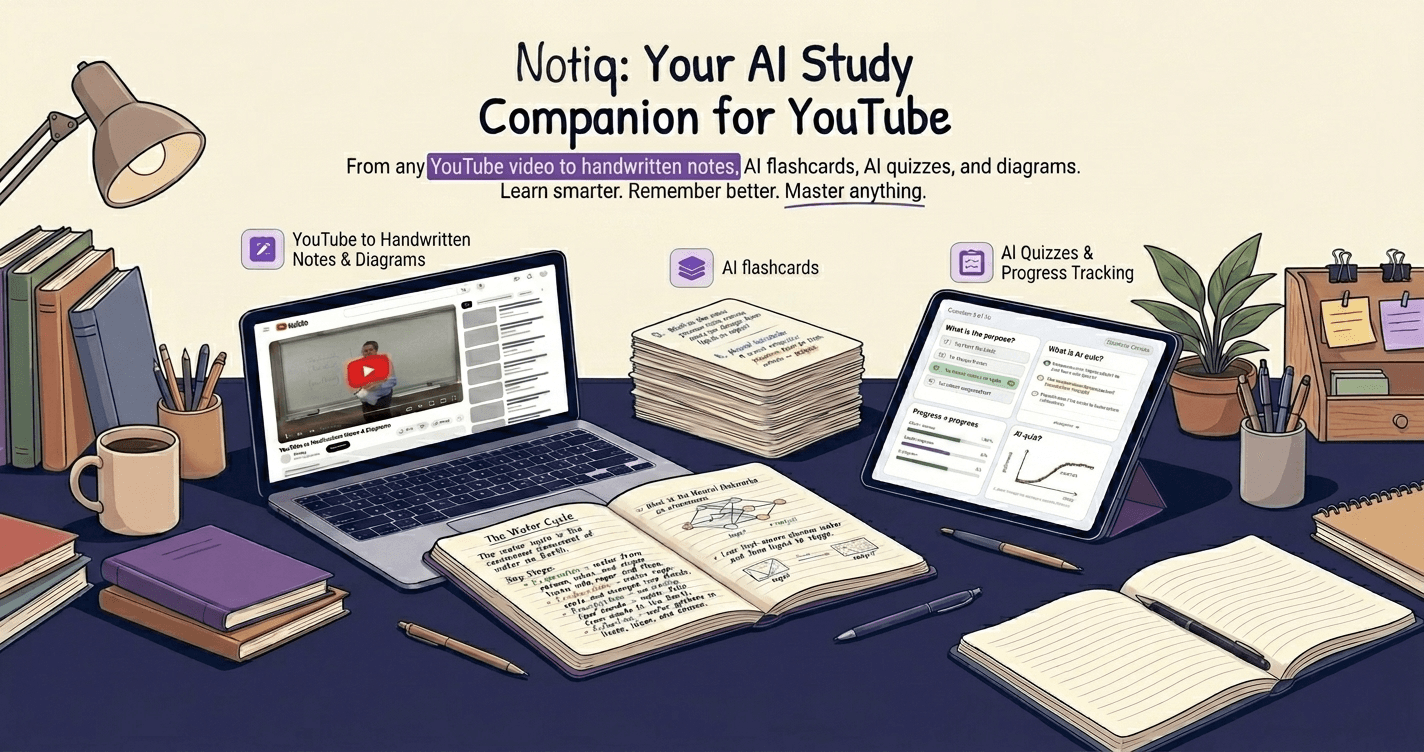
Turn your psychology lecture notes into structured flashcards automatically. Try Notiq free at notiq.study — import any YouTube psychology lecture and get organized chapter notes plus exam-ready flashcards in minutes.